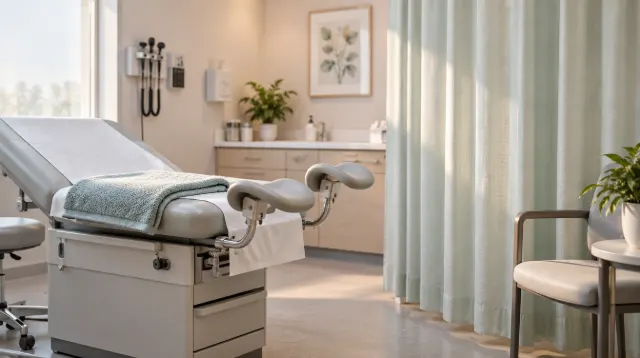
Your First Gynecologist Visit: What to Expect
What happens at a first gynecologist visit, when to go, whether you need a pelvic exam, the questions you’ll be asked and how to prepare so you feel in control.

How often to see a gynecologist at every age: annual well-woman visits, Pap and HPV screening intervals, mammograms, STI tests and when to book sooner.

Many people assume they only need a gynecologist when a Pap test is due. In fact, guidelines recommend a yearly visit, and the tests you need along the way follow their own timetables. Here’s how it fits together.
The American College of Obstetricians and Gynecologists (ACOG) recommends an annual well-woman visit. It’s a chance to talk about periods, contraception, sexual health, pregnancy plans, menopause and anything else on your mind, and to catch up on screenings and vaccines. A yearly visit doesn’t mean a yearly Pap test or pelvic exam; those depend on your age and symptoms.
Most health plans must cover a well-woman visit without cost-sharing when you see an in-network clinician. Our insurance guide explains what’s included.
| Age | Visits and common screenings (average risk) |
|---|---|
| 13–15 | First reproductive health visit, usually just a conversation |
| 13–20 | Yearly visit; no Pap test before 21 |
| 21–29 | Yearly visit; Pap test every 3 years |
| 30–65 | Yearly visit; HPV test every 5 years, or another recommended option |
| 40–74 | Mammogram every 2 years (USPSTF) |
| Over 65 | Yearly visit; cervical screening may stop if earlier results were normal |
Screening schedules for Pap and HPV tests are covered in detail in our guide to Pap smear guidelines by age. Your clinician may recommend a different schedule if you have a higher risk, such as a history of abnormal results or a weakened immune system.
The CDC recommends yearly chlamydia and gonorrhea testing for sexually active women under 25, and for older women with risk factors such as a new partner or multiple partners. It also recommends everyone aged 13 to 64 be tested for HIV at least once. You can ask for STI testing at any visit; you don’t need to wait for your yearly check-up.
Don’t wait for your annual visit if you notice:
Not always. Family physicians, internists, nurse practitioners and certified nurse-midwives also provide well-woman care, contraception and cervical screening. A gynecologist is especially helpful for complex periods, pelvic pain, fertility, pregnancy and menopause care. Read what an OB-GYN does to decide who fits your needs.
Write down your questions, note the first day of your last period and bring a list of medicines. If this is your first appointment, our guide to your first gynecologist visit explains what to expect.
Yes. Well-woman visits cover periods, pain, vaccines, general health and screenings that aren’t related to sexual activity.
Yes. Yearly visits remain useful for menopause symptoms, bladder and pelvic floor health, bone health and breast screening, even if cervical screening has stopped.
Only when there’s a reason, such as symptoms or specific tests. It isn’t automatically part of every visit.

Every article is edited by a human and checked against our editorial policy. Spotted a mistake? Tell us.
What happens at a first gynecologist visit, when to go, whether you need a pelvic exam, the questions you’ll be asked and how to prepare so you feel in control.
What happens during a pelvic exam, step by step: the external, speculum and bimanual parts, when an exam is needed, and how to make it more comfortable.
Useful questions to ask your gynecologist about screenings, birth control, periods, sexual health, pregnancy plans and menopause, plus tips for getting answers.