
Your First Gynecologist Visit: What to Expect
What happens at a first gynecologist visit, when to go, whether you need a pelvic exam, the questions you’ll be asked and how to prepare so you feel in control.

What happens during a pelvic exam, step by step: the external, speculum and bimanual parts, when an exam is needed, and how to make it more comfortable.
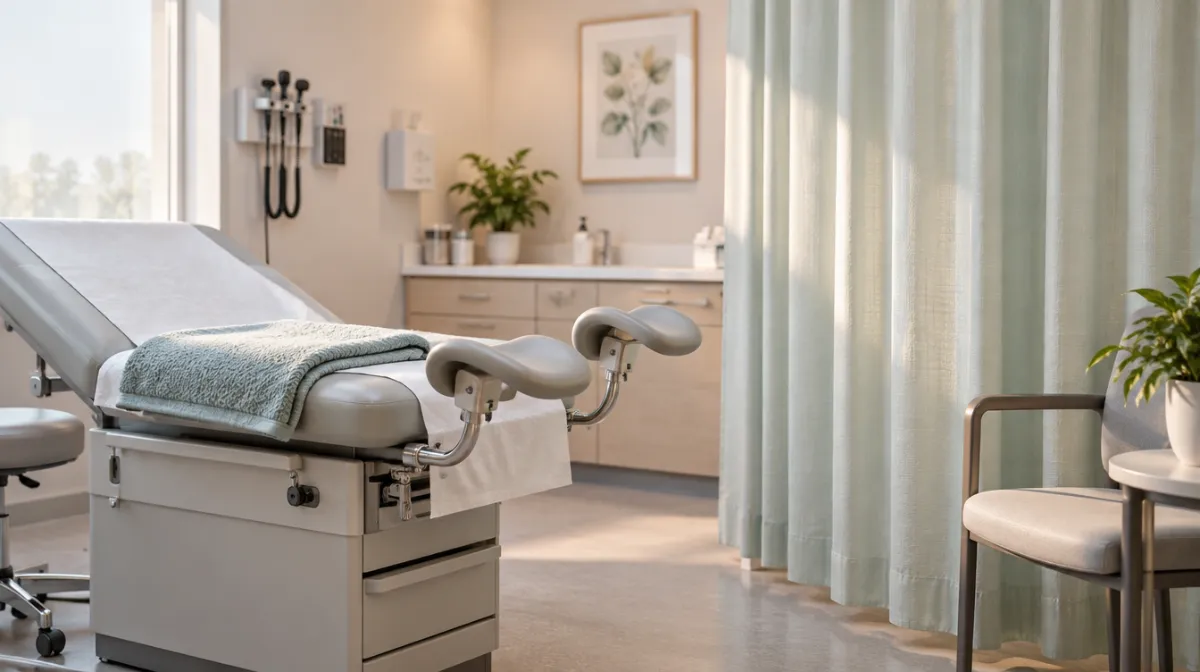
A pelvic exam usually takes just a few minutes, but many people feel anxious beforehand, especially the first time. Knowing what happens, and why, can make it much easier. You stay in control throughout.
A pelvic exam isn’t automatically part of every gynecologist visit. The American College of Obstetricians and Gynecologists (ACOG) recommends exams when your symptoms or medical history call for one, and a shared decision between you and your clinician when you have no symptoms. The US Preventive Services Task Force has found insufficient evidence to recommend routine screening pelvic exams for people without symptoms.
Common reasons for an exam include:
You don’t need a pelvic exam to start the pill, patch, ring, shot or implant. Our birth control guide compares those options.
You’ll undress from the waist down in private and be given a sheet or gown. You’ll lie on your back with your feet in footrests, or with your knees bent and relaxed apart.
The clinician looks at the vulva for irritation, sores, cysts or other changes.
A speculum, a smooth instrument made of metal or plastic, is gently inserted into the vagina and opened so the clinician can see the vaginal walls and cervix. If you’re due for screening, they use a small brush or swab to take a sample from the cervix. Most people feel pressure rather than pain. The speculum part usually takes a minute or two.
The clinician places one or two gloved, lubricated fingers in the vagina and presses gently on your lower abdomen with the other hand. This lets them feel the size and position of the uterus and ovaries and check for tenderness. Occasionally, a rectovaginal exam is also needed.
You have the right to know what’s being done and why, to say who is in the room, including students, and to withdraw consent at any point. A good clinician will welcome your questions. If you’re looking for someone new, our guide to choosing a gynecologist explains what to look for.
Not by itself. STI testing uses swabs, urine or blood tests, which may be collected during the exam. Ask if you want testing.
Usually, yes, though heavy bleeding can affect some test samples. Call the clinic to ask whether to reschedule.
Only when there’s a reason. Your yearly visit doesn’t have to include one; see how often to see a gynecologist.

Every article is edited by a human and checked against our editorial policy. Spotted a mistake? Tell us.
What happens at a first gynecologist visit, when to go, whether you need a pelvic exam, the questions you’ll be asked and how to prepare so you feel in control.
How often to see a gynecologist at every age: annual well-woman visits, Pap and HPV screening intervals, mammograms, STI tests and when to book sooner.
Useful questions to ask your gynecologist about screenings, birth control, periods, sexual health, pregnancy plans and menopause, plus tips for getting answers.